Trends in used car exports: Ecological, standardized, and brand-oriented
Share Box
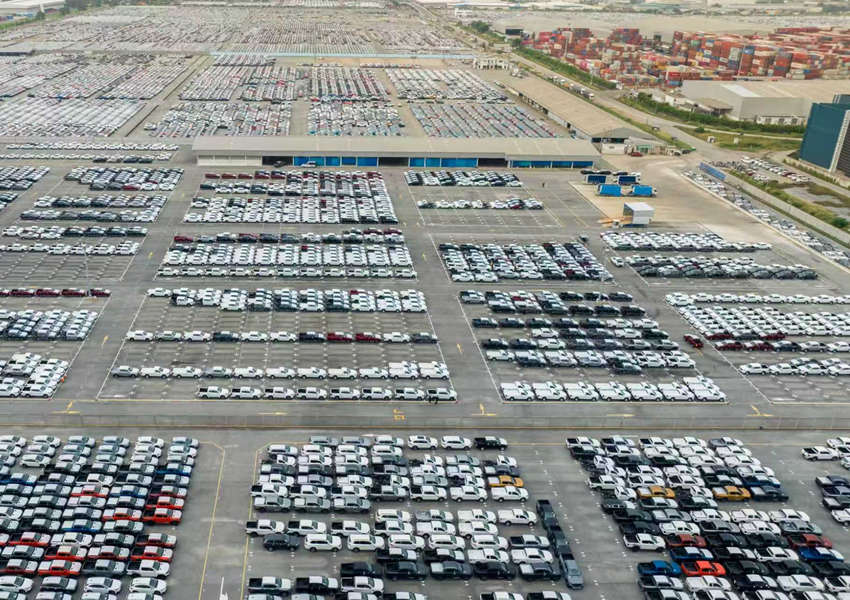
On August 22nd, the 2025 China Used Car Export Ecology Conference, hosted by the China Automobile Dealers Association (CADA) with the theme “Guangzhou Connects the World, Links All Regions”, was held in Guangzhou. The conference conducted in-depth discussions on core topics such as the interpretation of used car export policies, global market trends, and industrial chain collaboration. It also witnessed the establishment of the Used Car Institutional Vehicle Source Export Working Group, marking that China’s used car exports have officially entered a new stage of “ecological, standardized and branded” development.
Government, Enterprise and Academic Circles Jointly Plan a New Strategic Blueprint for Used Car Exports
At the critical juncture of the global automotive industry transformation, China’s used car exports are embracing unprecedented opportunities. Relevant data shows that in 2024, the export volume of China’s used cars exceeded 400,000 units, covering more than 160 countries and regions in Southeast Asia, the Middle East, Latin America, Europe, etc., becoming an emerging force driving automobile consumption and promoting industrial upgrading.
Luo Lei, Vice President of CADA, stated in his speech that currently, China’s used car exports are in a golden period where policy dividends and market boom overlap. With a car ownership of over 400 million units, a mature supply chain system, and cost-effective vehicle options, China has a solid foundation for used car exports. At the same time, it is imperative to build a coordinated development pattern featuring “government guidance, enterprise main body, and association empowerment” for China’s used car exports. By establishing a standardized and international service system to break through overseas market barriers, a more competitive global used car circulation network can be formed.
Bidaou, Ambassador of Burkina Faso to China, said in his opening speech that against the dual background of accelerated industrialization in Africa and deepened China-Burkina Faso economic and trade cooperation, Burkina Faso is fostering the automotive industry as a new engine for national economic growth. He sincerely invited Chinese automobile enterprises to seize this historical opportunity to participate deeply in the construction of the automotive industry through methods such as investing in factories, technical cooperation, and supply chain collaboration. They can also explore areas such as used car exports and circulation system construction to share the development dividends in fields like new energy vehicles and special-purpose vehicles. Meanwhile, he expressed the expectation that automobiles will serve as a link to promote exchanges and mutual learning between the two countries in industries, culture, and people-to-people exchanges, and jointly write a new model of economic and trade cooperation under the framework of the Forum on China-Africa Cooperation (FOCAC).
Gao Dewu, CEO of Shenzhou Car Rental, delivered a speech noting that as the global automobile circulation system is undergoing accelerated changes, reliable vehicle sources are the cornerstone of the ecology, and transparent information is the bridge of trust. As an important participant in China’s used car exports, Shenzhou Car Rental achieved a phased progress with the export sales of long-mileage used cars reaching over 1,200 units in the first half of the year. During the exploration of export business, Shenzhou Car Rental has also realized that the “second half” of used car exports is not simply about “selling vehicles”, but about “selling an ecology”. Shenzhou Car Rental is willing to work with industry associations, automakers, overseas distributors and other peers to share vehicle source management experience, explore paths for joint standard-setting, and expand the blue ocean of the global market.
Multi-Dimensional Insights to Solve Pain Points: Decoding Opportunities and Growth Space for Used Car Exports
In the “Industry Insights” session, Xu Changming, a senior economist at the National Information Center, delivered a keynote speech titled “Global Automotive Industry Changes and China’s Opportunities”. He analyzed that the core driving force for global automobile demand growth is accelerating its shift from developed countries to emerging markets. Chinese automobile brands have achieved strong market performance in regions such as Russia, Central Asia, the Middle East (accounting for 13% of the market), and ASEAN. New energy vehicles even account for more than 50% of the market in emerging markets. Although there will be challenges such as EU barriers in the future, with the improvement of the competitiveness of independent brands, localized production and service enhancement, the prospect of China’s “full-chain automobile going global” is broad.
Huang Ruoyu, Chairman of the Used Car Export Branch of CADA, stated in his keynote speech “China’s Rise in the Reconstruction of the Automotive Industry Order” that China has shifted from “following” to “reconstructing”: through the dual output of technology and production capacity, China is promoting the irreversible process of the eastward shift of global automotive power. China ranks first in the world in terms of production, sales and exports (with 6.4 million units exported), which has reshaped trade flows and laid the foundation for the eastward shift pattern. In the past three years, the export value of China’s used cars has jumped by nearly 7 times. Chinese automobile enterprises have adopted a three-line layout strategy to gain advantages: focusing on fuel vehicles with reliable performance in the Middle East, electric vehicles supported by sound infrastructure in Europe, and cost-effective vehicles in Latin America.
Li Jia, Vice President of Shenzhou Car Rental, pointed out in his keynote speech “Opportunities and Challenges of Long-Mileage Used Car Exports” that China’s used car exports need to overcome three major hurdles – “professionalism, trust, and scale” – to establish international competitive advantages. Based on Shenzhou Car Rental’s more than one year of overseas practice, Li Jia put forward three key paths:
1.Proactively “going global” by deploying direct sales networks in 6 key countries around the world through port front warehouses, overseas warehouses, and overseas offices, covering more than 30 surrounding countries;
2.Integrating resources by joining hands with domestic institutional vehicle source providers to establish a “Vehicle Source Working Group”, sharing overseas business opportunities to improve matching efficiency;
3.Focusing on “quasi-standard products” by promoting the transformation of non-standard used cars to standardized ones through the “four identicals” strategy (same year, same mileage, same vehicle condition, same price), so as to enhance market trust.
He called on institutional vehicle source providers, logistics, after-sales and other supporting enterprises to make joint efforts, and adopt the path of “institutional vehicle sources taking the lead, supporting services following up, and trading platforms going global” to jointly promote China’s long-mileage used car exports to a new level.
Jointly Building an Ecology to Gather Strength: The Used Car Institutional Vehicle Source Export Working Group Officially Launches
As one of the core achievements of the 2025 China Used Car Export Ecology Conference, the “Used Car Institutional Vehicle Source Export Working Group” was officially launched. As a member organization under the Used Car Export Branch of CADA, the working group is jointly initiated and established by CADA and Shenzhou Car Rental. The first batch of members includes 23 automakers, 7 financial leasing institutions, 5 leasing and mobility service enterprises, and 3 distributors, covering the entire industrial chain from vehicle source supply, financial services to circulation services. It will become one of the most representative industrial cooperation platforms in China’s current used car export field.
“The core goal of the working group is to integrate scattered institutional vehicle sources, technologies, and channel resources into a ‘unified network’, transforming China’s used car exports from ‘fighting alone’ to ‘going global in a group’, jointly building the overseas reputation of Chinese used cars, and making them the preferred channel for overseas bulk purchases,” said the representative of Shenzhou Car Rental, the core initiating unit of the working group, while interpreting the development plan of the Used Car Institutional Vehicle Source Export Working Group on site.
It is understood that the working group will focus on four major directions:
1.Establishing vehicle source standards to promote “high-quality and low-cost products for export”;
2.Setting product standards to ensure “convenient transactions”, with its core advantage being the provision of bulk vehicle sources featuring “same model, same registration year, same vehicle condition grade, and same mileage range”;
3.Ensuring transparent vehicle conditions and adhering to the principle of integrity;
4.Jointly building a sound overseas service system to ensure the long-term and sustainable development of export business.
Decoding Full-Chain Practical Cases: Opening Up a Standardized Path for China’s Used Car Exports
In the “Ecology” session of the conference, a number of frontline experts shared “practical insights” focusing on the full-process implementation of used car exports.
Zhao Zhe, Vice President of Shenzhou Car Rental, systematically presented the company’s full-industrial-chain layout and future strategic planning in his keynote sharing “Shenzhou Car Rental’s Ecological Blueprint”. As China’s largest car rental enterprise, Shenzhou Car Rental has built a full-chain ecology covering “purchasing, renting, maintaining, and selling” by virtue of its brand influence formed through 18 years of in-depth development, the barrier of direct operation mode, and large-scale operation advantages. Currently, its business covers new car procurement, rental services, its own maintenance system, and domestic and foreign used car layout. In July 2025, it launched the world’s first L4-level autonomous driving car rental product, exploring the integrated scenario of “mobile third space” and smart tourism. In addition, Zhao Zhe deeply analyzed the collaborative logic between vehicle full-life-cycle management and global circulation driven by technology, providing the industry with a replicable ecological solution of “vehicle use – circulation – going global”.
Yan Fei, Chairman of the Guangdong Automobile Dealers Association, pointed out in his sharing “Development of Used Cars in Guangdong Province” that relying on the market foundation of Guangdong, the province with the largest car ownership in China, Guangdong has promoted the acceleration of used car exports through policy support and service optimization. This includes the establishment of a special service mechanism led by the Department of Commerce and jointly participated by 11 departments, which has shortened the processing time of key procedures such as tax rebates and vehicle transfers to within one week. Since the end of last year, the association has organized three overseas market inspections in Southeast Asia, the Middle East, Central Asia, etc. throughout the year to help member enterprises connect resources. Against this background, in the first 7 months of this year, Guangdong’s used car exports reached 46,000 units, exceeding the total volume of last year. Yan Fei noted that Guangdong has advantages such as good vehicle conditions, a high proportion of luxury/mid-to-high-end cars, and prominent cost-effectiveness. Combined with policy support, long-mileage used car exports are becoming a new trend. He welcomed distributors across the country to set up offices in Guangzhou.
Shen Boya, International Partner of Haiwen & Partners, Ge Jinqiu, General Manager of Overseas Business at Chaboshi (a used car inspection service provider), and Cheng Bei, Founder and CEO of Wangao Automotive Technology Co., Ltd., successively delivered keynote speeches titled “Used Cars Going Global: Insights into the Legal Environment of Target Markets”, “The Construction of the Reputation of China’s Used Car Exports”, and “The Decisive Power in the ‘Later Stage’ of Used Car Exports: The Construction and Practice of After-Sales Service Systems”. They systematically analyzed the access thresholds and risk prevention strategies for Chinese used cars to enter overseas markets from three dimensions: legal compliance, inspection standards, and after-sales services, providing “pit avoidance guides” for participating enterprises.
In the roundtable forum session, representatives from automakers, rental enterprises, overseas distributors and other entities discussed hot industry topics, with many insightful remarks made on site and consensus gradually formed.
Regarding the topic “The Interdependence and Competition Between New Car Exports and Used Car Exports”, hosted by Wang Meng, an expert from CADA, representatives from CADA, the automotive industry association of Peking University’s National School of Development, and Che Lizi Technology Co., Ltd. jointly explored the industrial collaboration logic. Experts pointed out that new cars solve the problem of “brand awareness”, while used cars meet the demand for “market penetration”. The two form a “pyramid”-style complementary relationship and jointly expand China’s global automobile market.
On the topic “Global Competition Strategy for China’s Long-Mileage Used Cars”, hosted by Pan Lei, an expert from CADA, representatives from SAIC Volkswagen, GAC Group, Geely Automobile, and Shenzhou Car Rental unanimously agreed that through transparent inspection and localized after-sales services, long-mileage used cars can transform “high mileage” into a “durability” label. Markets such as the Middle East have shown a significantly increased acceptance of long-mileage used cars.
As policies, markets, local governments, and enterprises join forces to promote the high-quality development of the industry, the “golden age” of China’s used car exports will surely arrive at an accelerated pace, enabling China to move from “leading in quantity” to “leading in ecology” on the global automobile circulation stage.