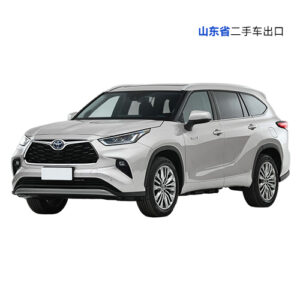
Used Car Exports: Unlocking New Growth Drivers for China's Automotive Industry
Share Box
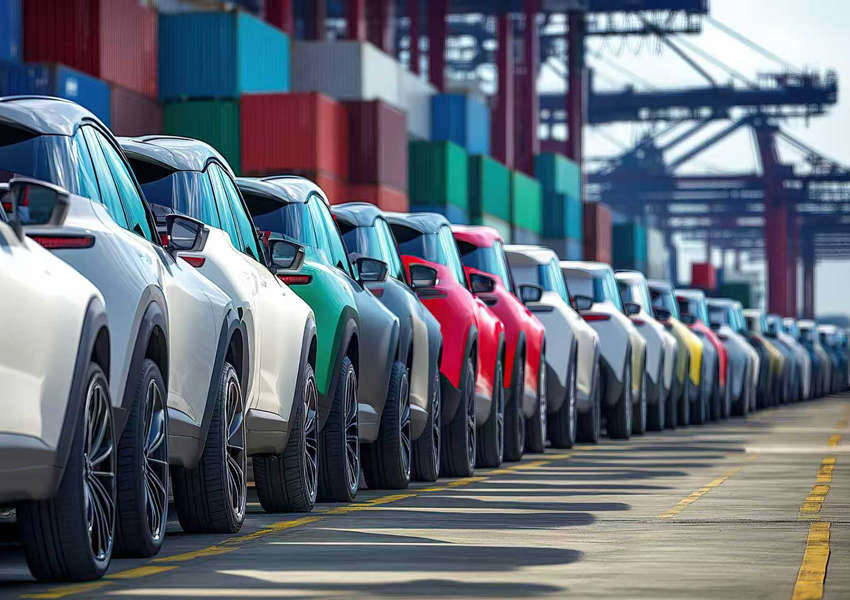
Against the b ackdrop of the accelerated transformation of the global automotive industry and countries’ pursuit of cost-effective automotive products, China’s automotive industry is embracing new development opportunities. In recent years, policies governing used car exports have been gradually implemented and continuously optimized, which not only expand the boundaries of the domestic automotive market but also steadily enhance the international influence of Chinese automotive brands. This policy has demonstrated strong potential in inventory digestion, market expansion, and industrial upgrading, and is reshaping the way the automotive industry participates in the global market.
Policy Progress and Market Foundation
Since the Ministry of Commerce, the Ministry of Public Security, the General Administration of Customs, and other relevant departments jointly issued the Notice on Supporting the Development of Used Car Export Business in Regions with Mature Conditions, China’s used car export business has officially entered a new stage of institutionalized advancement. Initially, the policy was piloted in certain qualified regions to explore replicable and promotable export models. As the pilot projects achieved remarkable results, the policy coverage gradually expanded. Up to now, more than 30 regions have been approved to carry out used car export business, marking that the complete vehicle export system is accelerating its adjustment from a new-car-oriented model to a model that emphasizes both new and used vehicles.
Meanwhile, after years of development, China’s automotive market has formed a huge stock foundation, providing abundant vehicle supply reserves for used car exports. Currently, the national motor vehicle ownership continues to rise, and the vitality of the used car market has significantly increased. After the implementation of relevant policies, the circulation structure of used cars has accelerated its transformation from a single domestic internal circulation to a coordinated development of internal and external dual circulations. A cross-regional circulation mechanism oriented to exports has been initially established, providing vehicle enterprises with more flexible resource allocation space and, to a certain extent, driving the coordinated development of the upstream and downstream of the export industrial chain.
Digesting Inventory and Enhancing Circulation Efficiency
One of the core pain points of the market lies in the poor circulation of used cars, resulting in the coexistence of idle vehicle backlogs and price declines. In the past, a large number of vehicles were traded locally, lacking a flexible adjustment mechanism, which easily led to regional supply-demand mismatches. Used car exports precisely play the role of a “balancer” by diverting domestic redundant inventory to overseas markets with broader demand. On one hand, this eases the pressure of price competition in the domestic market; on the other hand, it enhances vehicle enterprises’ ability to dispose of old models and improves the overall circulation efficiency of used cars.
Especially with the rapid popularization of new energy vehicles (NEVs), the residual value of traditional fuel vehicles has declined significantly, and many enterprises are facing the dilemma of “no buyers for old cars”. Driven by policies, the large-scale application of used car exports has opened up concentrated regional export channels for the surplus production capacity of fuel vehicles. These vehicles are highly adaptable to some overseas emerging markets, which not only improves the overall asset return rate but also provides opportunities for vehicle enterprises to supply more cost-effective products to overseas markets.
Going Global to Expand Growth Space
Used car products, with cost-effectiveness as their core advantage, have inherent appeal in developing countries and underdeveloped regions. Many emerging markets have a high acceptance of cars with 3 to 5 years of service, which is highly consistent with the export structure of China’s used car market. The export volume of China’s used cars has grown rapidly, especially in Southeast Asia, the Middle East, Africa, and countries along the “Belt and Road” Initiative. Used car exports have become an important link to promote regional trade and strengthen industrial cooperation.
Such market expansion not only brings short-term economic benefits but also shapes the international reputation of Chinese automotive brands. Wherever these used cars go, consumers’ recognition of the quality of Chinese independent brands gradually improves, laying the foundation for the overseas export of Chinese complete vehicle brands. In the long run, used cars are not only a form of commodity export but also an extended carrier of technology, service systems, and brand recognition, promoting the structural optimization of Chinese automobiles in the global industrial chain.
Forcing Industrial Upgrading and Improving Product Standards
An export-oriented automotive industry system imposes higher requirements on the professional preparation and service standards of vehicles. To maintain competitiveness in overseas markets, export enterprises must strengthen the construction of inspection, refurbishment, certification, and technical support systems for used cars. This trend not only improves the quality of complete vehicles but also drives the technological upgrading of the domestic automotive inspection and preparation industry.
At the same time, the coverage of after-sales service networks has become another key factor in the competition among export enterprises. Enterprises need to establish maintenance points, spare parts distribution systems, and customer service centers overseas to ensure users’ vehicle experience. This puts forward higher professional requirements for automotive circulation enterprises, but at the same time, it also becomes a breakthrough to enhance market stickiness and establish long-term business models. The whole-industry-chain collaborative development mechanism formed around exports will become an important engine for the upgrading of China’s automobile manufacturing industry towards intelligent manufacturing and refined services.
Layout Strategies and Practical Paths
To explore overseas markets, enterprises should not rely solely on price advantages but need to make simultaneous efforts in three aspects: compliance access, after-sales service, and market matching. Export qualification review has become a standard requirement, and enterprises must form a systematic closed loop in terms of export legality, environmental compliance, and data traceability. In particular, it is necessary to strengthen adaptability to international certifications such as VAT (Value-Added Tax) and COC (Certificate of Conformity).
Take a typical export enterprise as an example: on the basis of completing vehicle refurbishment in its own preparation factory, it has established maintenance points through overseas partners and labeled inventory vehicles with quality tags to realize hierarchical sales. This has successfully achieved the regional expansion and reputation accumulation of the export market. In just two years, the enterprise has completed the layout of an export network covering more than ten countries, with orders increasing by over 150%. It is a model of the optimized allocation of domestic policies and markets.
For enterprises to “go global” and achieve sustainable development, they need to adopt strategies such as international automobile agency payment, cross-border sales in multiple countries, and optimization of transportation modes. Currently, some domestic complete vehicle groups have taken the lead in establishing alliance-based overseas market platforms to jointly promote brand influence, stabilize the export supply chain, and form a new model of “group going global”.
Future Outlook
With the changes in the consumption structure of the overseas automotive market and the improvement of the global recognition of Chinese brands, the future of used car exports will gradually move towards brand-oriented, institutionalized, and systematic development. In 2024, the total volume of used car exports increased by more than 30% year-on-year, and export channels are transforming from decentralized operations to brand-oriented operations.
From the national perspective, if the supervision system for exported used cars can be further improved, the mutual recognition of certifications can be promoted, and cross-border settlement can be optimized, the automotive industry can rely on this export engine to deeply match domestic resources with international demand. In the future, used car exports are expected to become an integrated global layout path integrating “complete vehicles + after-sales market + brand services”, promoting the continuous expansion of China’s automotive industry upgrading strategy.